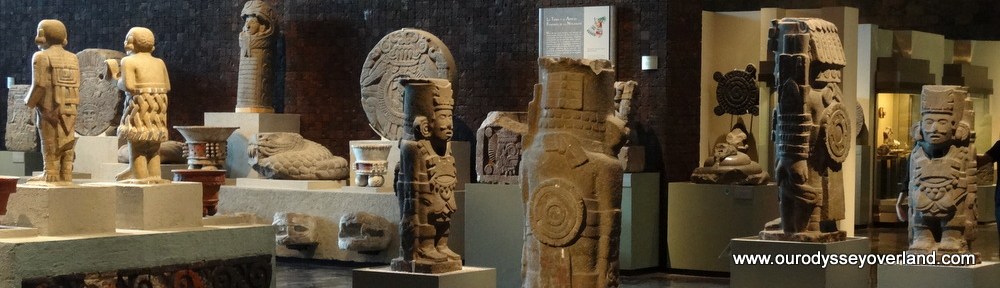

We loved our time in Mexico City. It is bursting with museums and galleries, of which our visit to the National Anthropology Museum (NAM) was a highlight.
The NAM showcases the 2,700 year long history of ancient civilisation in this country in 12 halls jam-packed with artefacts. This outstanding collection is all from Mexico, alone, and we had the chance to visit many of these places during our travels. The museum emphasises just how sophisticated and artistic these civilisations were before the arrival of the Spanish conquistadors in 1519.
Here are a few of our favourite things from the NAM:
1. Big Heads

These heads were carved by what is considered to be Mexico’s mother civilisation: The Olmecs (1200-400BCE). The statues show the head of a helmeted man with indigenous features, believed to represent Olmec rulers. Seventeen heads have been found at various sites in Mexico, each weighing about 20 tonnes. There is much speculation about how the Olmecs were able to move these massive pieces of basalt from their quarries to their final resting places, up to 80km away.
2. The Pyramid of the Feathered Serpent
The Pyramid of the Feathered Serpent (built from 150-200CE) is located at Teotihuacan, the religious and political centre of the largest pre-Hispanic empire in Mexico. The replica of the temple’s façade is another highlight of the museum. The sculptured detail and colours on the outside are incredible and a little terrifying, showing the heads of Tlaloc, the god of rain (left) and feathered serpent, thought to be symbol of war (right). In the 1980s of more than a hundred bodies (possibly sacrificial victims) were found buried beneath the temple.


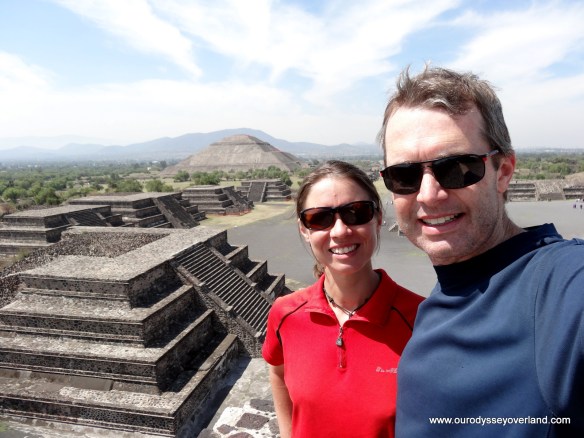
The city of Teotihuacan was planned as a model of the Universe. With a huge workforce at their disposal, the rulers embarked on ambitious building projects that constructed the awesome Pyramids of the Sun, the world’s third largest pyramid, and Moon. Incidentally, the world’s largest pyramid is located just 129km away in Cholula, which we also visited.
3. Tomb of Pakal the Great
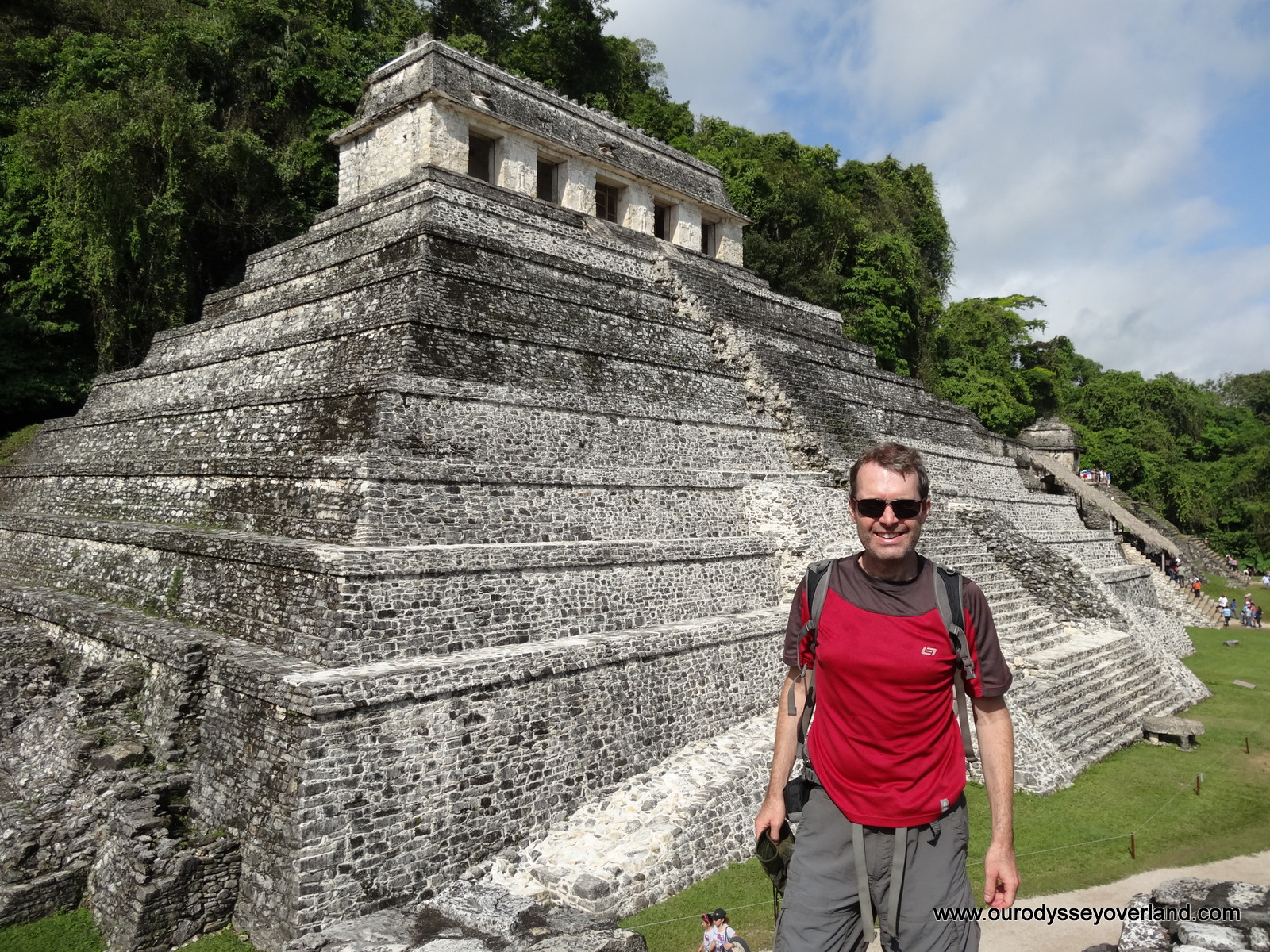 King Pakal was a ruler of the Mayan city Palenque between 615-683CE. Under his leadership, the city flourished and the buildings that were constructed are considered to be some of the best examples of Mayan architecture to be seen today. In 1952, his tomb was discovered 25 metres under the floor of one of these buildings, the magnificent Temple of Inscriptions.
At the museum, steps take you down into a full-scale model of King Pakal’s tomb. The tomb contained a large sarcophagus made out of a single limestone slab intricately carved with images of the Maya world. Due to its size and weight, it is believed that the sarcophagus was made first and the temple was built around it. Inside the sarcophagus, the body of the king was decorated with an exquisite jade mask, along with other jade jewellery.


4. The Sun Stone
The Sun Stone, a gladiatorial sacrificial altar, is one of the most famous works of Aztec sculpture. The sculpted motifs that cover the surface of the stone refer to the Aztec’s beliefs about the origins of the world.
The Aztecs had become the most powerful group in central Mexico by the 15th century. Their capital was on the site of present-day, downtown Mexico City. Once conquering the Aztecs in 1521, the Spanish destroyed Aztec monuments as part of their effort to instill their new order and the Sun Stone was buried under newly built streets. In 1790, works were undertaken to strengthen the foundations of the city cathedral and the Sun Stone was rediscovered under the main plaza!


Some more photos are in our online gallery.
 Our Odyssey Overland
Amazing that was going on all around the world so long ago- and we think we’re clever!