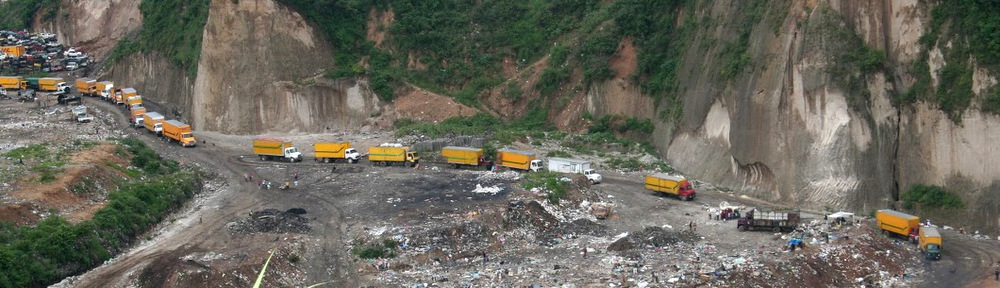
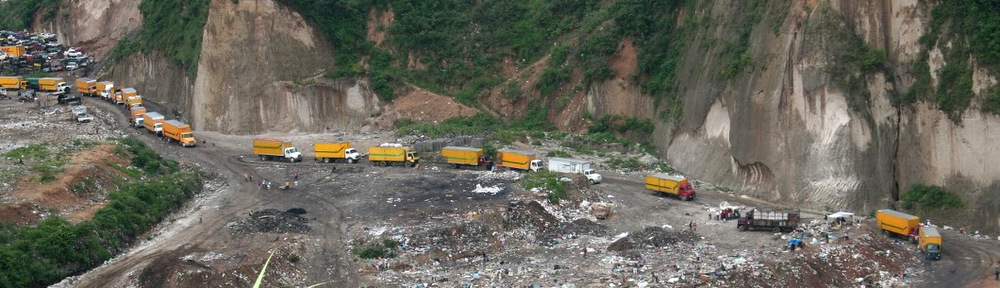
The scene before me was impossible to take in. The movement of a yellow truck caught my attention and gave me something small, something manageable to focus on.
I watched as it bumped its way along the dirt track and immediately a swarm of people ran to place a hand on its flanks. They moved with the truck, walking with their hand firmly in place until the truck stopped, opened its back doors and disgorged its cargo onto the ground: a massive pile of rubbish. The followers quickly gathered around the mound, hoping to salvage enough treasure to feed their family for another day.
Matt and I were standing on the edge of a canyon, looking down upon the 40-acre Guatemala City rubbish dump – the largest dump in all of Central America. We had come here to learn more about the community we would be working with for the next month as volunteers for the organisation Camino Seguro/Safe Passage. Permits are required to enter the dump, so we had been escorted to this viewpoint by Camino Seguro and an armed security guard.
This grim reality exists as a result of decades of internal war and economic hardship, forcing rural Guatemalans to leave their communities and come to the city in search of a livelihood and a better life. Armed with little or no education, and lacking the skills demanded by an urban environment, they have found a way to survive by making money from what others don’t want: rubbish.
One third of Guatemala’s rubbish is brought to this open dump. With no official recycling program in place, everything ends up here: the “good” rubbish (food, recyclables and resellable items) and the “bad” rubbish (such as toxic materials and used toilet paper). We were told that medical waste no longer comes here.
The workers look for anything that can be sold or recycled, including plastic, glass, clothing, cardboard, aluminium or scrap metal. They sell it to buyers in the dump or carry their findings out of the dump to sell them for a higher price on the street. A worker earns on average Q40 (AUD 6.15) per day and with this must support their family (the average number of children per family in this community is four).
Each garbage truck is numbered and has a specific collection territory, which the workers know by heart. Trucks collecting from rich suburbs, supermarkets or restaurants are the most popular and workers will rush to lay their claim on these trucks, placing their hand on its side as it enters the dump.
Beside me, a US expat explained to me how her first visit here had changed her “rubbish behaviour”. She now makes sure her bin contains treasures for the dump workers to find by cleaning, sorting and carefully bagging her rubbish before loading her bin. She hoped this made life a little easier for the workers who found it, all ready for resale.
The rubbish that isn’t salvaged piles up and degrades, producing methane that poisons the air and creates a serious fire risk. In 2005 a fire broke out and burnt for days, covering the city with smoke and prompting the government to take some action. From then on, no one was permitted to live in the dump and, officially, children under the age of 14 were no longer allowed to work there. A wall was built around the dump and a work permit system enforced.
But one person recognised the work to be done way back in 1999. Upon seeing children working in this toxic environment, an American school teacher was moved to immediately take action to change it. Her name was Hanley Denning and she was the founder of Camino Seguro.
As we looked down on this scene and considered our upcoming work, it was easy to be filled with pity for this community. However, we were soon to learn that these people are proud, strong and resilient in the face of extreme adversity. They don’t need pity, they just need a little help.
Posted by Fiona
Thank you to Camino Seguro for providing these photos.


 Our Odyssey Overland